
SCIENTIFIC TITLE:
professor of humanities / prof. dr hab.
POSITION:
Full professor
UNIT:
The Robert Zajonc Institute for Social Studies, University of Warsaw
e-mail: kofta@psych.uw.edu.pl
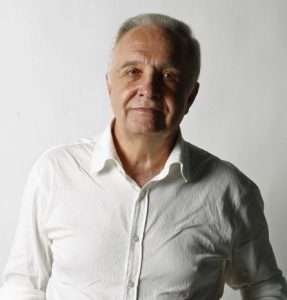
Mirosław Kofta was born 03.01.1945 in Lwów. Professor of Psychology at the University of Warsaw, Psychology Faculty. Life Award for Scientific Achievements from Polish Ministry of Science & Higher Education. His major contributions center around the role of personal control and its deprivation in social cognition. Among others, he developed (in collaboration with prof. Grzegorz Sędek) an information-processing model of human psychological response to prolonged lack of control (the theory of cognitive exhaustion). Studied freedom of choice in moral behavior, learned helplessness, attribution processes, stereotyping, prejudice, dehumanization, and conspiracy theories (with particular stress on understanding antisemitism). Publications in Journal of Personality and Social Psychology, Journal of Experimental Psychology: General, Journal of Social Issues, Journal of Personality, Social Psychology, Political Psychology, European Journal of Social Psychology, British Journal of Social Psychology, Sex Roles, Group Processes and Intergroup Relations, Social Psychological Bulletin. Member of Polish Association of Social Psychology PSPS and European Association of Social Psychology EASP.
Major contributions
- Sankaran, S., Kofta, M., Soral, W., & Lewczuk, K. (2025). Threat to control promotes utilitarian moral judgment: The Role of judgment type and length of control deprivation. British Journal of Social Psychology 64(1), e12829.
- Soral, W., Bukowski, M., Cichocka, A. K., Lewczuk, K., Marchlewska, M., Rędzio, A., Skrodzka, M., & Kofta, M. (2024). Prolonged unemployment is associated with control loss and personal as well as social disengagement. Journal of Personality, 92(6), 1704-1725.
- Soral, W. & Kofta, M. (2022). Cues of collective threat increase salience of positive ingroup agency-related traits. Social Psychology, 53(2),73–83. https://doi.org/10.1027/1864-9335/a000477
- Soral, W., Kofta, M., & Bukowski, M. (2021). Helplessness experience and intentional (un-)binding: Control deprivation disrupts the implicit sense of agency. Journal of Experimental Psychology: General, 150(2), 289-305. http://dx.doi.org/10.1037/xge0000791
- Kofta, M., Soral, W., & Bilewicz, M. (2020). What breeds conspiracy antisemitism? The role of political uncontrollability and uncertainty in the belief in Jewish conspiracy.
Journal of Personality and Social Psychology, 118(5), 900–918. https://doi.org/10.1037/pspa0000183 - Soral, W., Kofta, M. (2020). Differential effects of competence and morality on self-esteem at the individual and the collective level. Social Psychology, 51(3), 183–198 https://doi.org/10.1027/1864-9335/a000410
- Suszek, H., Kofta, M., & Kopera, M. (2020, June). Priming with childhood constructs influences distance perception. Frontiers in Psychology. Volume 11, Article 1184
- Kofta, M. & Soral. W. (2020, 11 March). Belief in the Round Table conspiracy and political division in Poland. Social Psychological Bulletin, 14 (4). https://doi.org/10.32872/spb.v14i4.2435
- Marchlewska, M., Castellanos, K. A., Lewczuk, K., Kofta, M., & Cichocka, A. (2018). My way or the highway: High narcissism and low self-esteem predict decreased support for democracy. British Journal of Social Psychology, 58(3), pp. 1-18. DOI:10.1111/bjso.12290591
- Niemyjska, A., Szczepańska, M., & Kofta, M. (2018). Perceptions of divine figures among Polish people struggling with homelessness or alcohol addiction. International Journal for the Psychology of Religion (May 2018). DOI: 10.1080/10508619.2018.1482132
- Bukowski, M., & Kofta, M. (2017). From coping to helplessness: Effects of control deprivation on cognitive and affective processes. In M. Bukowski, I. Fritsche, A. Guinote, & M. Kofta (Eds)(2017), Coping with lack of control in a social world (pp. 15-34). London: Routledge.
- Kofta, M., Baran, T., & Tarnowska, M. (2014). Dehumanization as a denial of human potentials: The naïve theory of humanity perspective. In P. Bain, J. Vaes, &, J. Ph. Leyens (Eds.), Humanness and dehumanization (256-275). New York: Psychology Press.
- Bilewicz, M., Winiewski, M., Kofta, M., & Wójcik, A. (2013). Harmful Ideas. The structure and consequences of antisemitic beliefs in Poland. Political Psychology, 34(6), 821-839.
- Cichocka, A., de Zavala, A. G., Kofta, M., & Rozum, J. (2013). Threats to feminist identity and reactions to gender discrimination. Sex Roles, 68(9-10), 605-619.
- Kofta, M., & Slawuta, P. (2013). Thou shall not kill… your brother: Victim− perpetrator cultural closeness and moral disapproval of Polish atrocities against Jews after the holocaust. Journal of Social Issues, 69 (1), 54-73.
- Bilewicz, M., & Kofta, M. (2011). Less biased under threat? Self‐verificatory reactions to social identity threat among groups with negative self-stereotypes. Journal of Applied Social Psychology, 41(9), 2249-2267.
- Castano, E., & Kofta, M. (2009). Dehumanization: Humanity and its denial. Group Processes & Intergroup Relations, 12(6), 695-697.
- Kofta, M., & Sędek, G. (2005). Conspiracy stereotypes of Jews during systemic transformation in Poland. International Journal of Sociology, 35(1), 40-64.
- McIntosh, D. N., Sędek, G., Fojas, S., Brzezicka-Rotkiewicz A. & Kofta, M. (2005). Cognitive performance after preexposure to uncontrollability and in a depressive state: Going with a simpler plan B. In R.W. Engle, G. Sedek, U. von Hecker & D.N. McIntosh (Eds.), Cognitive limitations in aging and psychopathology (pp. 219-246). Cambridge: Cambridge University Press.
- Doliński, D., & Kofta, M. (2001). Stay tuned: The role of the break in the message on attribution of culpability. In W. Wosinska, R. Cialdini, J. Reykowski, & D. Barret (Eds.), The practice of social influence in multiple cultures (pp. 241-258). Hillsdale NJ: Erlbaum.
- Kofta, M., & Sędek, G. (1999). Uncontrollability as irreducible uncertainty. European Journal of Social Psychology, 29, 577-590.
- Kofta, M., & Sędek, G. (1998). Uncontrollability as a source of cognitive exhaustion: Implications for helplessness and depression. In M. Kofta, G. Weary, & G. Sędek, (Eds.), Personal control in action: Cognitive and motivational mechanisms (pp. 391-418). New York: Plenum Press.
- Kofta, M. (1993). Uncertainty, mental models, and learned helplessness: An anatomy of control loss. In G. Weary, F. Gleicher, & K. Marsh (Eds.), Control motivation and social cognition (pp. 122-153). New York: Springer.
- Sędek, G., Kofta, M., & Tyszka, T. (1993). Effects of uncontrollability on subsequent decision making: Testing the cognitive exhaustion hypothesis. Journal of Personality and Social Psychology, 65, 1270-1281.
- Sędek, G. & Kofta, M. (1990). When cognitive exertion does not yield cognitive gain: Toward an informational explanation of learned helplessness. Journal of Personality and Social Psychology, 58, 729-743.
- Kofta, M. & Sędek, G. (1989a). Repeated failure: A source of helplessness, or a factor irrelevant to its emergence? Journal of Experimental Psychology: General, 118, 3-12.
- Kofta, M. & Sędek, G. (1989b). Egotism versus generalization-of-uncontrollability explanations of helplessness: Reply to Snyder and Frankel. Journal of Experimental Psychology: General, 118, 413-416.
- Kofta, M. (1984). Freedom of choice and moral behavior. In E. Staub, D. Bar-Tal, J. Karyłowski, & J. Reykowski (Eds.), Development and maintenance of prosocial behavior: International perspectives on positive morality (pp. 257-269). New York: Plenum Press.
- Kofta, M. (1979). Samokontrola a emocje (Self-control and emotions). Warsaw: Polish Scientific Publishers PWN.
Degrees
Professor in Humanities and Social Sciences (scientific title), 1995.
Habilitation („doktor habilitowany” degree). University of Warsaw, personality and social psychology, graduated 1984, Thesis topic: „Przyczynowość osobista a regulacja zachowania” (Personal agency and regulation of behavior), at the University of Warsaw.
Doctor of Psychology. Adam Mickiewicz University (Poznań), personality psychology, graduated 1973, Thesis topic: „Samokontrola w przebiegu procesów emocjonalnych” (Self-control in the course of emotional processes). Advisors: prof. prof. Andrzej Lewicki and Bolesław Hornowski.
Master of Psychology. Adam Mickiewicz University (Poznań), graduated 1967, Thesis topic: “Psychologiczne mechanizmy radzenia sobie ze stresem („Psychological mechanisms of coping with psychological stress”).
Studies in psychology, 1962-1967, Adam Mickiewicz University (Poznań).
Major duties
- 2010-2012 The Council of the National Center for Science, member
- 2006-2010 Director of Center for Research on Prejudice, Warsaw University, Psychology Faculty
- 2000-2020 Director of Center for Psychological Studies, Robert Zajonc Institute for Social Studies, University of Warsaw.
- 1996-2008 Head of Personality Unit, University of Warsaw, Psychology Faculty.
- 1991-present: Scientific Council of the Institute for Social Studies, University of Warsaw, member
- 1991-1993: Director of the Robert Zajonc Institute for Social Studies, University of Warsaw (affiliated with the Institute for Social Research, University of Michigan, USA).
- 1990-1991: Director of Graduate Program, Psychology Faculty, University of Warsaw.
- 1987-1990: Head of Personality Unit, Faculty of Psychology, University of Warsaw.
- 1981-1982: Deputy Chairman of Psychology Faculty, University of Warsaw.
Rewards
2015: Life Award for Scientific Achievements from Polish Ministry of Science & Higher Education.
1980: Scientific Award of the Ministry of Education (for book on „Self-Control and Emotions” published by Polish Scientific Publishers PWN).
1976: Scientific Award of the Ministry of Education (for contribution to the leading Polish handbook of psychology with prof. Tadeusz Tomaszewski as an editor).
Teaching
Advisor of 17 doctor theses and about 80 master theses.
2023/2024 – Master Seminar
2023/2024 – Lecture on „Psychologiczne podstawy myślenia kolektywnego: Stereotypy, uprzedzenia, dehumanizacja, teorie spiskowe” (Psychological foundations of collective thinking: Stereotyping, prejudice, dehumanization, conspiracy theories).
Info about research activity might be found at:
ORCID: https://orcid.org/0000-0002-7148-372X
ResearchGate: https://www.researchgate.net/profile/Miroslaw-Kofta
Ludzie Nauki: https://ludzie.nauka.gov.pl/ln/profiles/qy2KUFuCU3y
PBN: https://pbn.nauka.gov.pl/core/#/person/view/5e709352878c28a0473a74a3/current
Academia.edu: https://independent.academia.edu/Miros%C5%82awKofta
wip